
Materials Guide
Kitchen Cabinet Materials and Construction
What a cabinet is made from determines how it behaves over a decade of South Florida humidity, daily use and the occasional leak. Here is a plain explanation of the options and where each belongs.
Call now for service availability. Please have your 5-digit ZIP code ready.
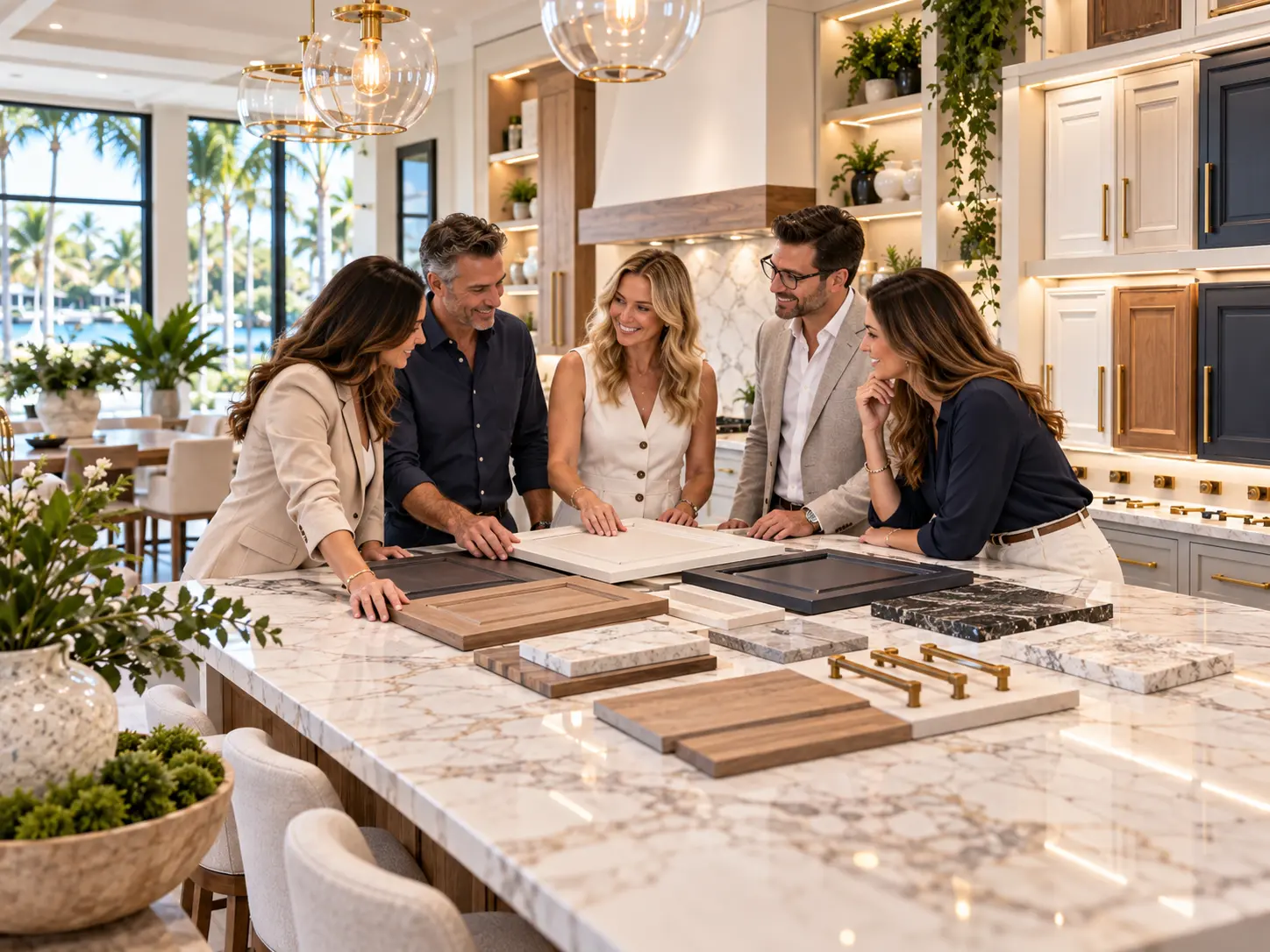
Cabinet Box Materials
The box is the structure. It carries the weight of contents and countertops, holds the hardware that everything else depends on, and takes whatever moisture the room produces.
- Plywood — cross-laminated layers give strong screw retention and good dimensional stability. It tolerates brief moisture exposure better than most alternatives, which is why it is frequently requested in coastal homes.
- Furniture-grade MDF — dense, flat and consistent, an excellent substrate for painted surfaces with no grain telegraph. Heavier than plywood and vulnerable to prolonged standing water.
- Particleboard with melamine — economical and stable in normal conditions, common in stock and entry semi-custom lines. Less forgiving of sustained moisture and of repeated hardware removal.
- Solid wood — rarely used for whole boxes in modern production because wide solid panels move seasonally. It belongs in face frames, doors and detail work.
Door and Front Materials
Doors are what you see and touch, and they are the part most affected by humidity cycling.
- Solid wood five-piece doors — beautiful, especially stained, and inherently subject to seasonal movement at the joints.
- MDF doors — either slab or routed to imitate a five-piece profile, with no joints to open. The standard choice for painted work where a seamless finish matters.
- Veneered doors — a real wood surface over a stable core, allowing continuous grain across tall panels without solid-wood movement.
- Thermofoil — a vinyl film heat-formed over MDF. Seamless and easy to clean; requires care near high-heat appliances.
- High-pressure laminate and acrylic — durable, color-consistent modern surfaces available in matte or high-gloss with excellent scratch resistance in the better grades.
Framed and Frameless Construction
Framed cabinets have a solid wood face frame at the front of the box, which adds rigidity and provides a mounting surface for hinges. It is the traditional American approach and supports inset doors well.
Frameless, sometimes called full-access or European construction, omits the frame so the entire box opening is usable. Drawers can be slightly wider and interiors are easier to reach. The full comparison lives on our framed versus frameless page.
Drawer Construction and Hardware
Drawer boxes are one of the clearest indicators of build quality. Dovetailed solid hardwood boxes with plywood bottoms hold up under weight and repeated use. Doweled or stapled engineered boxes cost less and perform adequately in light-duty drawers, but they are the first thing to fail in a heavily loaded pot drawer.
Glides matter as much as boxes. Full-extension undermount glides with soft-close bring the entire drawer out and keep the hardware invisible. Weight ratings vary considerably and are worth specifying for island and pantry drawers that will carry real loads.
- Dovetailed hardwood drawer boxes for primary work-zone drawers
- Full-extension undermount glides with a rating suited to the load
- Soft-close hinges with six-way adjustment for future alignment
- Corrosion-resistant hardware finishes in salt-air environments
- Adjustable shelf pins and sturdy shelf thickness to prevent bowing
Materials and South Florida Conditions
The kitchen environment here cycles: air conditioning drying the interior, open sliders admitting humid air, and occasional water events at the sink and dishwasher. Materials that resist swelling and finishes sealed on all six faces of a component perform best.
Pay particular attention to the sink base. A protective liner, sealed seams and hardware that tolerates moisture turn a small leak into an inconvenience rather than a replacement. Cabinetry on exterior walls and near sliders also sees more humidity swing than interior runs.
Where to Spend and Where to Save
If the budget is finite, the durable priorities are box material in wet zones, drawer box construction, glide quality and finish quality. Decorative elements — glass inserts, elaborate moldings, specialty finishes — deliver visual return but no longevity return.
Use the cost calculator to see how construction level and finish selection change the planning range, then decide where the money does the most work.
Design Inspiration
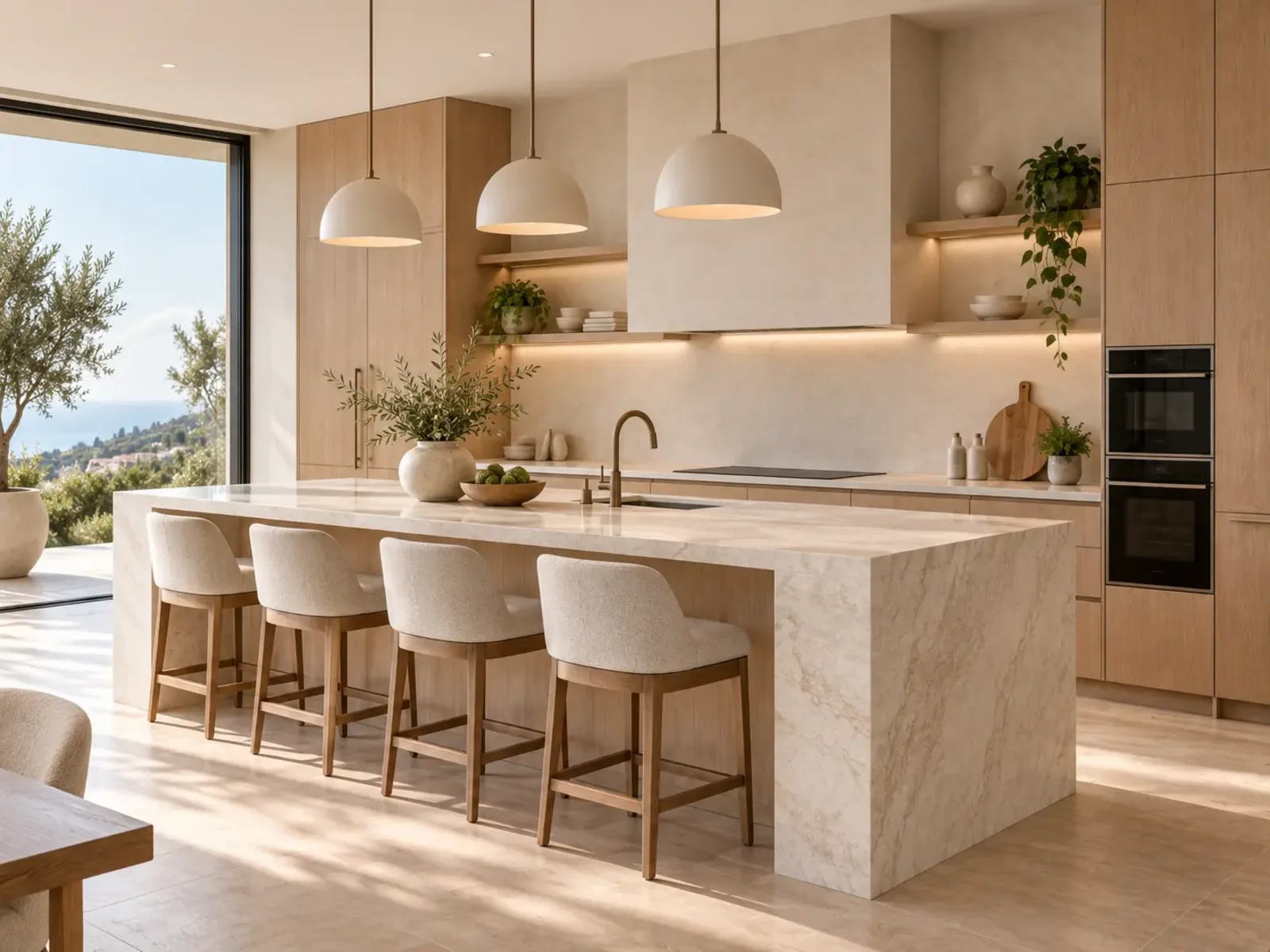
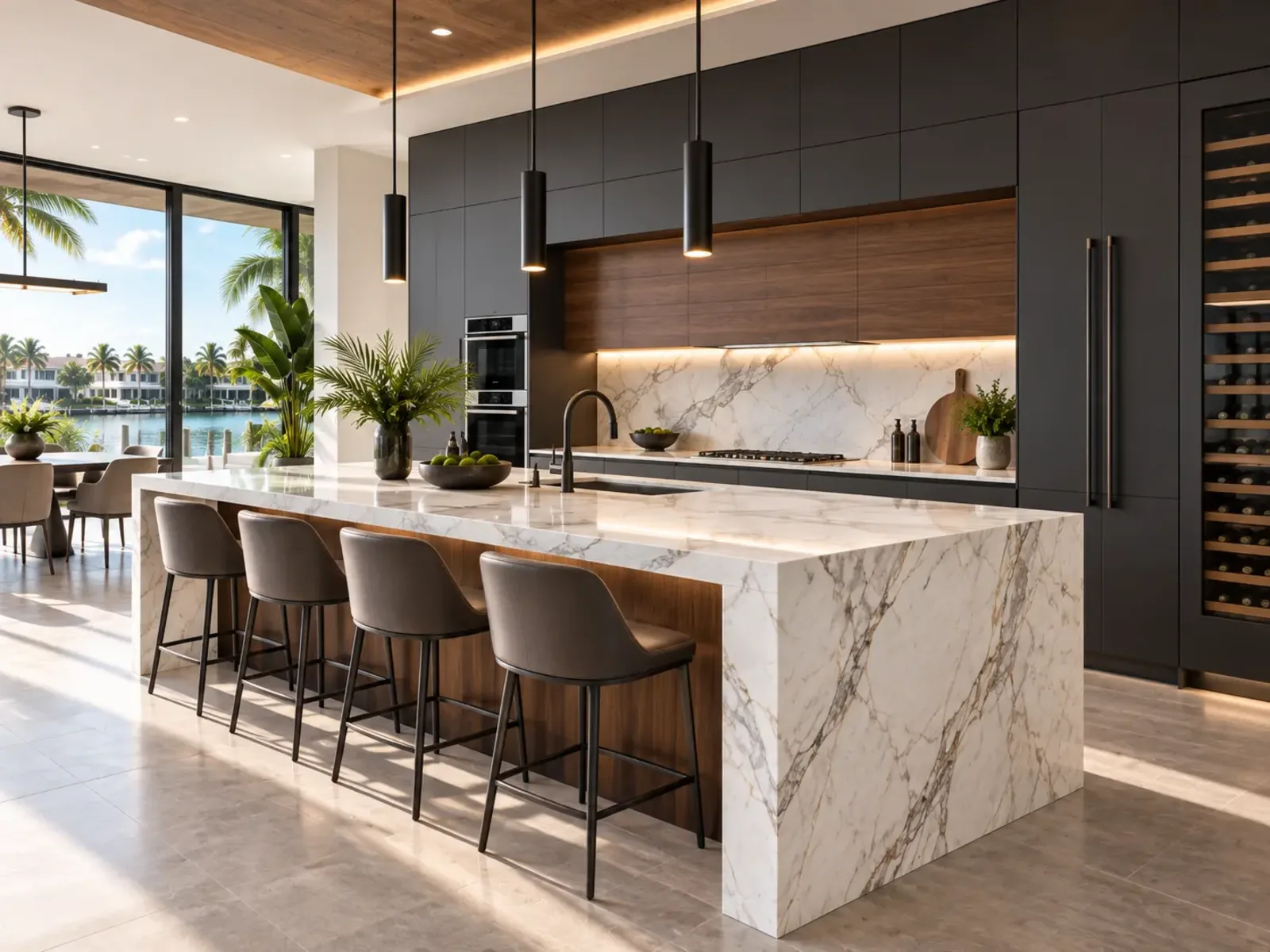
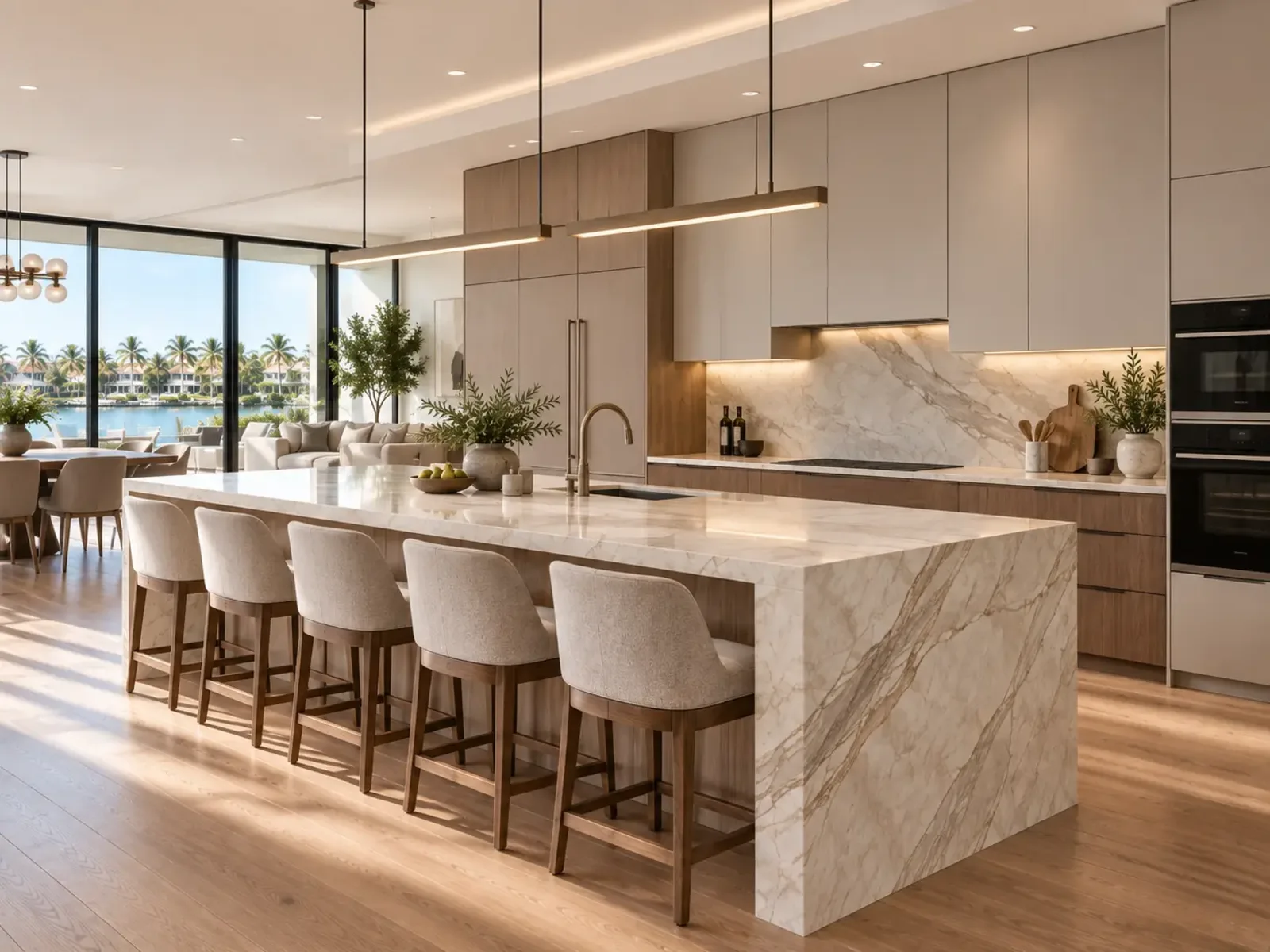
Materials in Finished Kitchens
Natural wood, walnut accents and engineered painted fronts, each shown alongside the stone they pair with.
Related Pages
Keep Planning
Plywood vs MDF
Direct comparison.
ViewFramed vs Frameless
Construction styles.
ViewCabinet Finishes
Paint, stain, sheen.
ViewCabinet Styles
Door profiles.
ViewCustom Cabinets
Specify your build.
ViewCost Guide
What materials cost.
ViewCabinet Hardware
Hinges, glides, pulls.
ViewCost Calculator
Model the build.
ViewHomeowner Questions
Frequently Asked Questions
In wet zones and heavily loaded cabinets, generally yes. Across an entire kitchen the upgrade cost is real, and some homeowners specify plywood for sink and island bases while accepting engineered boxes elsewhere. That targeted approach is a reasonable compromise.
Next Step
Planning New Kitchen Cabinetry?
Share your kitchen, your storage priorities and the look you have in mind. We will help you plan cabinetry that fits the room and the way you cook.
Call now for service availability. Please have your 5-digit ZIP code ready.