Style Guide
Kitchen Cabinet Styles for Palm Beach Homes
Door style sets the character of a kitchen more than any other single choice. This guide walks through the profiles that work well in West Palm Beach housing and what each one asks of the room around it.
Call now for service availability. Please have your 5-digit ZIP code ready.
Shaker
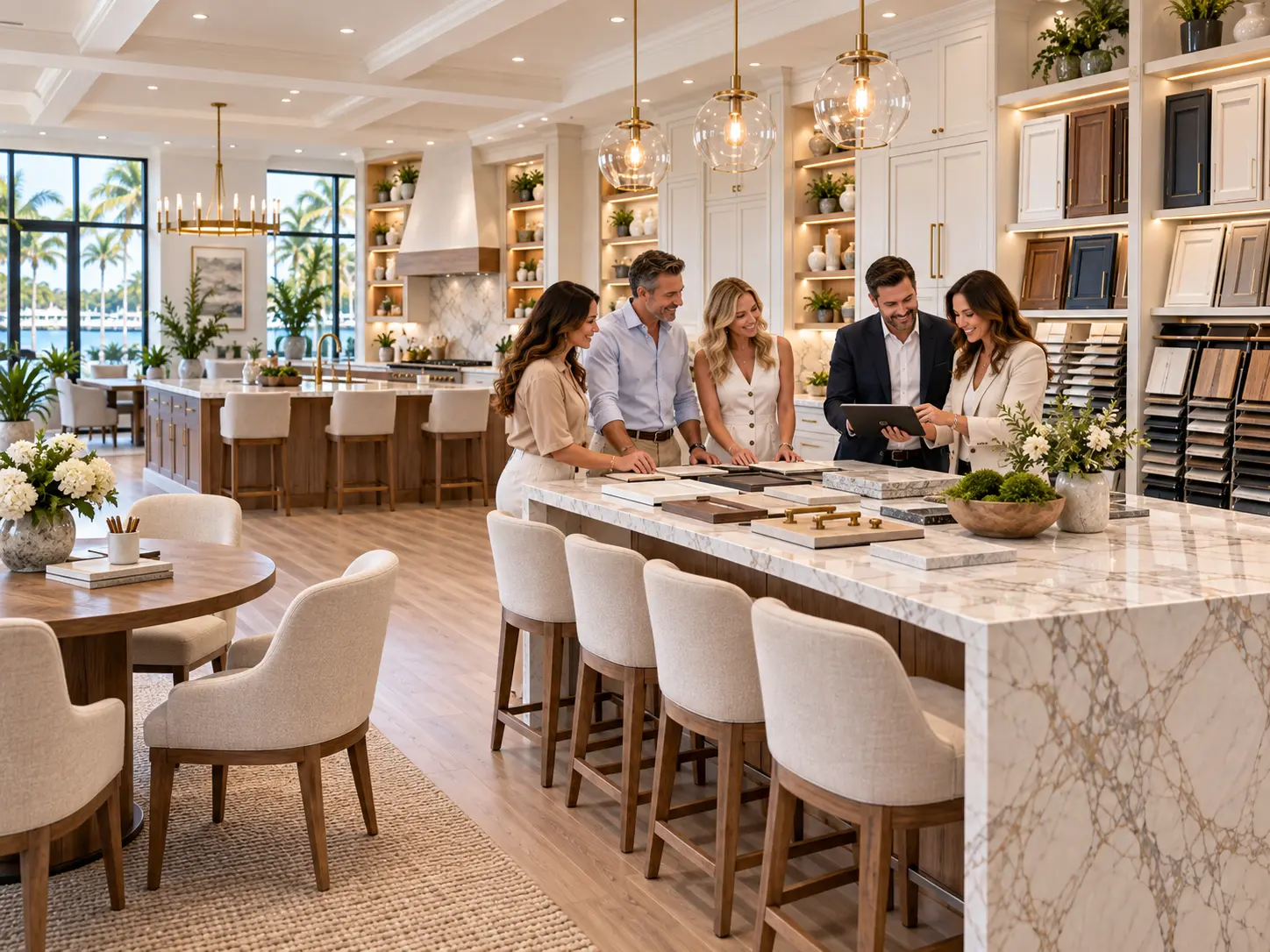
The recessed flat panel with a square frame is the most adaptable door in American kitchens, and there is a reason it appears in 1920s bungalows and brand-new construction alike. Its character shifts entirely with proportion and hardware: a narrow rail reads contemporary, a wider rail reads traditional, a small knob reads period and a long flat pull reads current.
Shaker holds paint well, handles a natural wood treatment gracefully and does not date quickly. For homeowners who are uncertain, it is very rarely the wrong answer. The dedicated shaker page covers proportions and care in detail.
Transitional
Transitional sits between traditional detailing and modern simplicity: a softened edge profile, a subtle bevel, or a shaker frame with a slight inner radius. It suits a great many West Palm Beach homes because the architecture itself is often transitional — coastal traditional exteriors with contemporary open interiors.
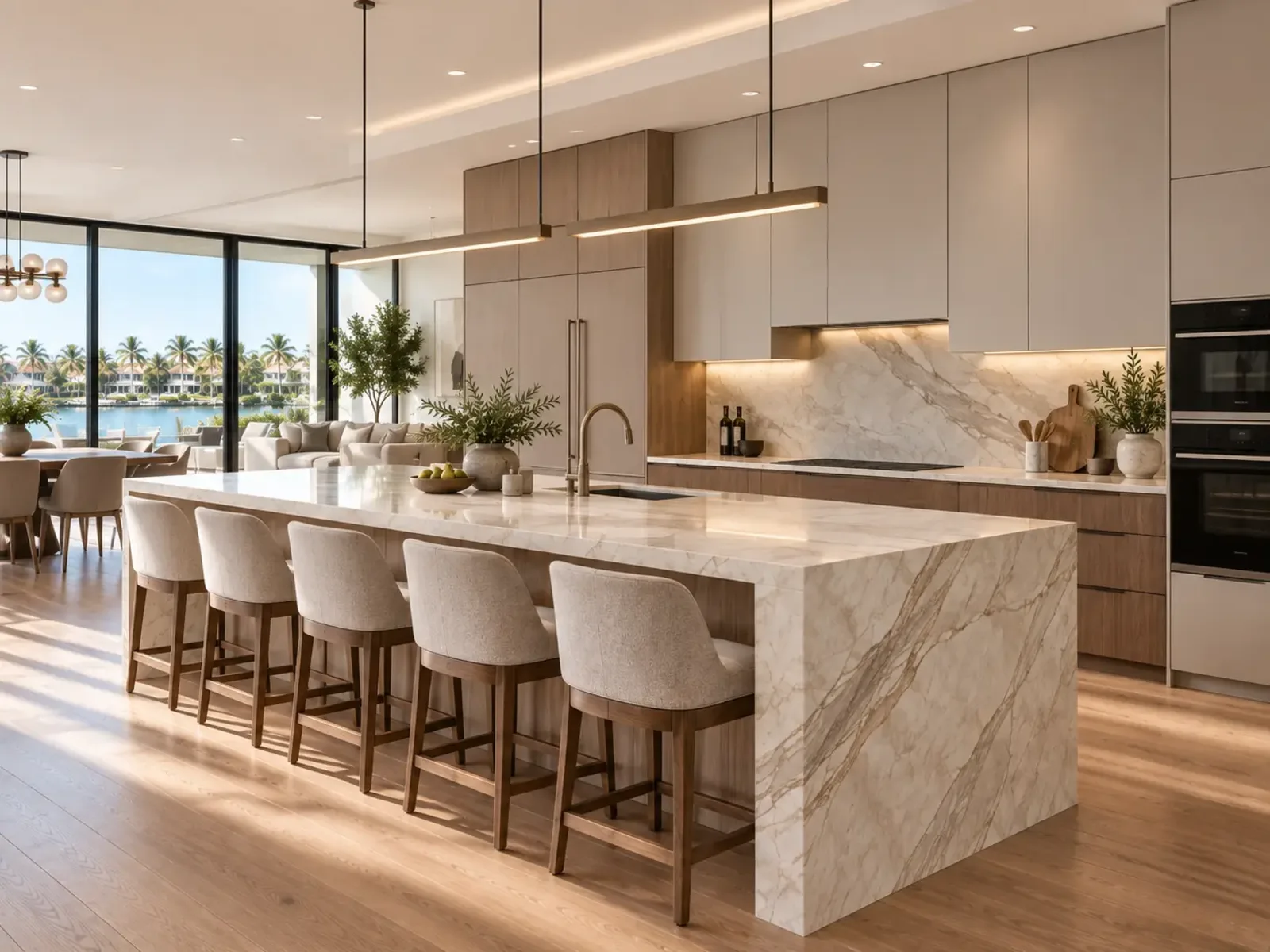
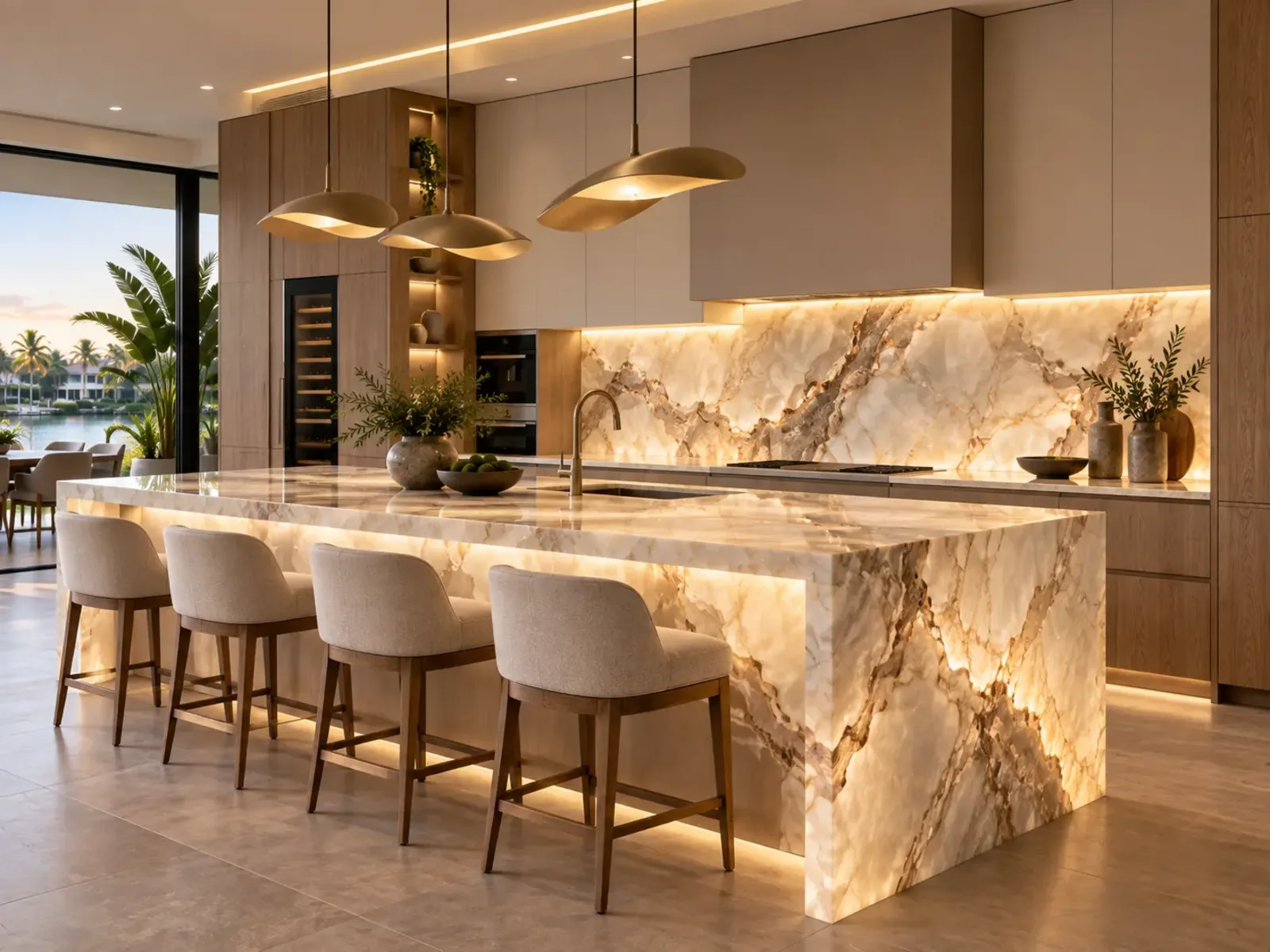
This style pairs well with marble-look surfaces, brass or nickel hardware and warm neutral palettes. It gives a kitchen some softness without committing to period detail.
Modern and Contemporary
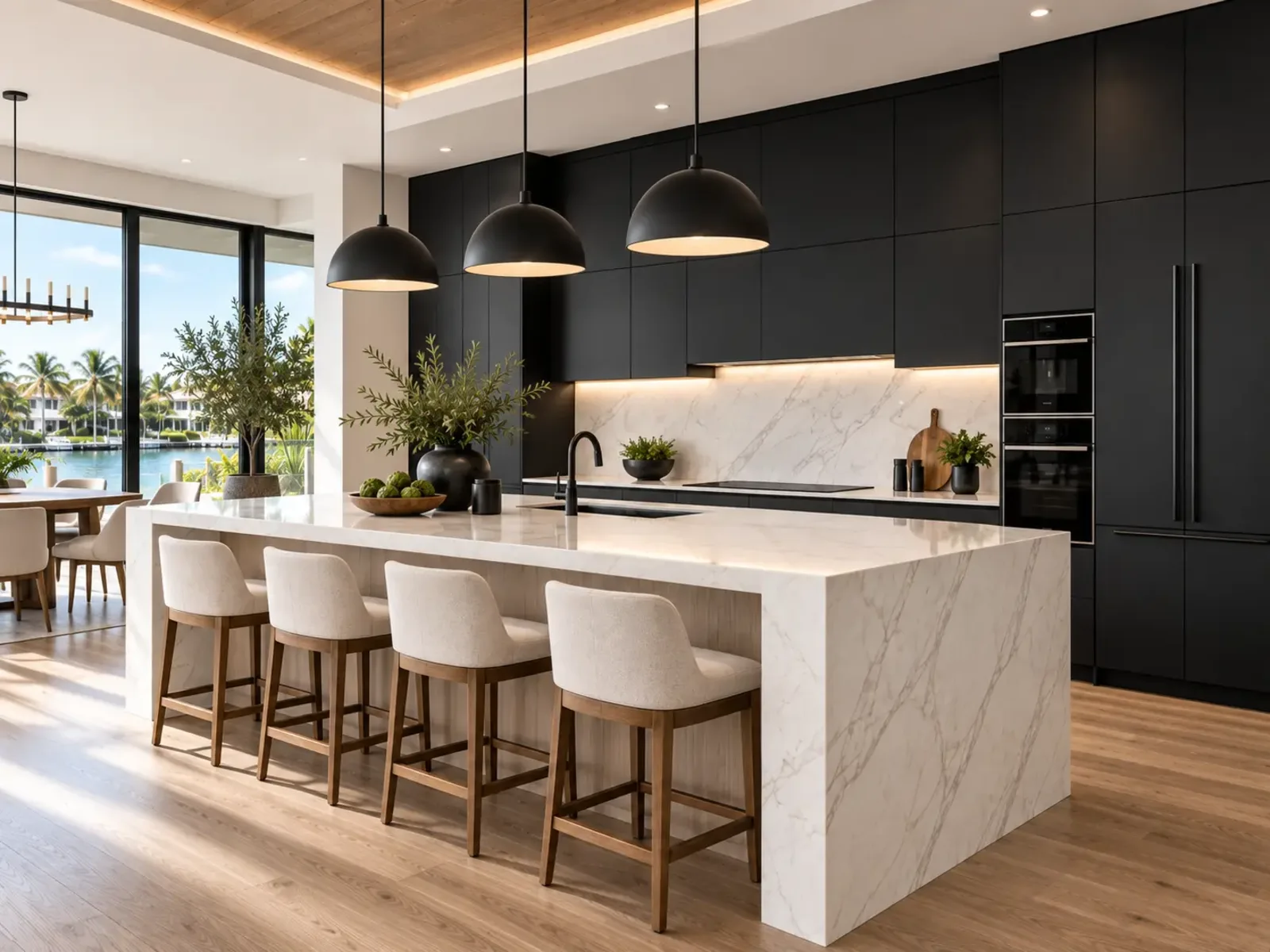
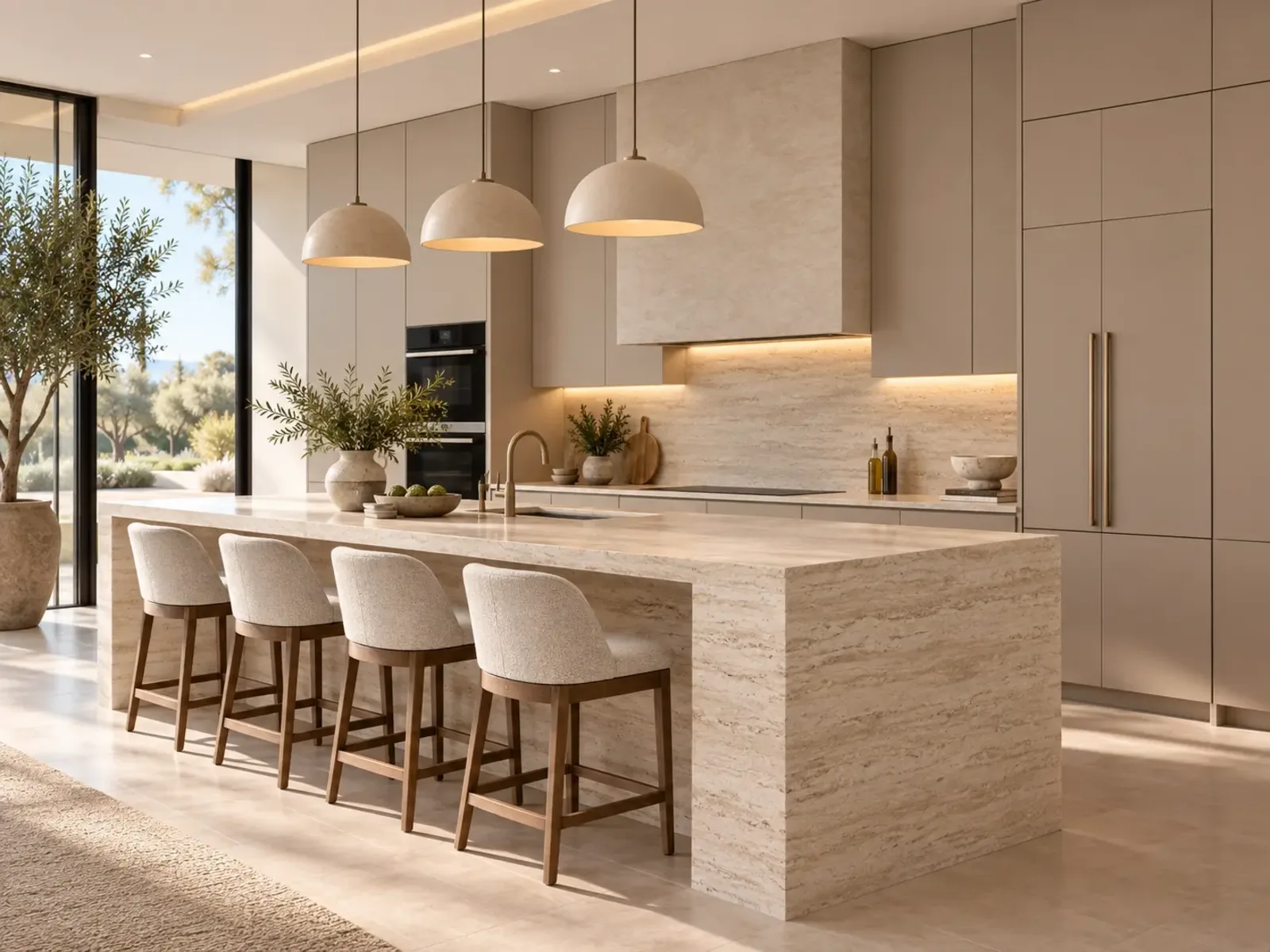
Flat slab doors with no frame remove ornament entirely and put the emphasis on material, grain and line. Long horizontal runs, minimal or integrated hardware, and the option of matte or textured surfaces make this the natural language for downtown high-rise kitchens and newer architecturally driven homes.
Contemporary is the looser cousin: current in feel but willing to mix a slab-front perimeter with a textured wood island or a fluted detail. Both reward restraint — with no moldings to hide behind, alignment and reveal consistency become very visible.
Coastal
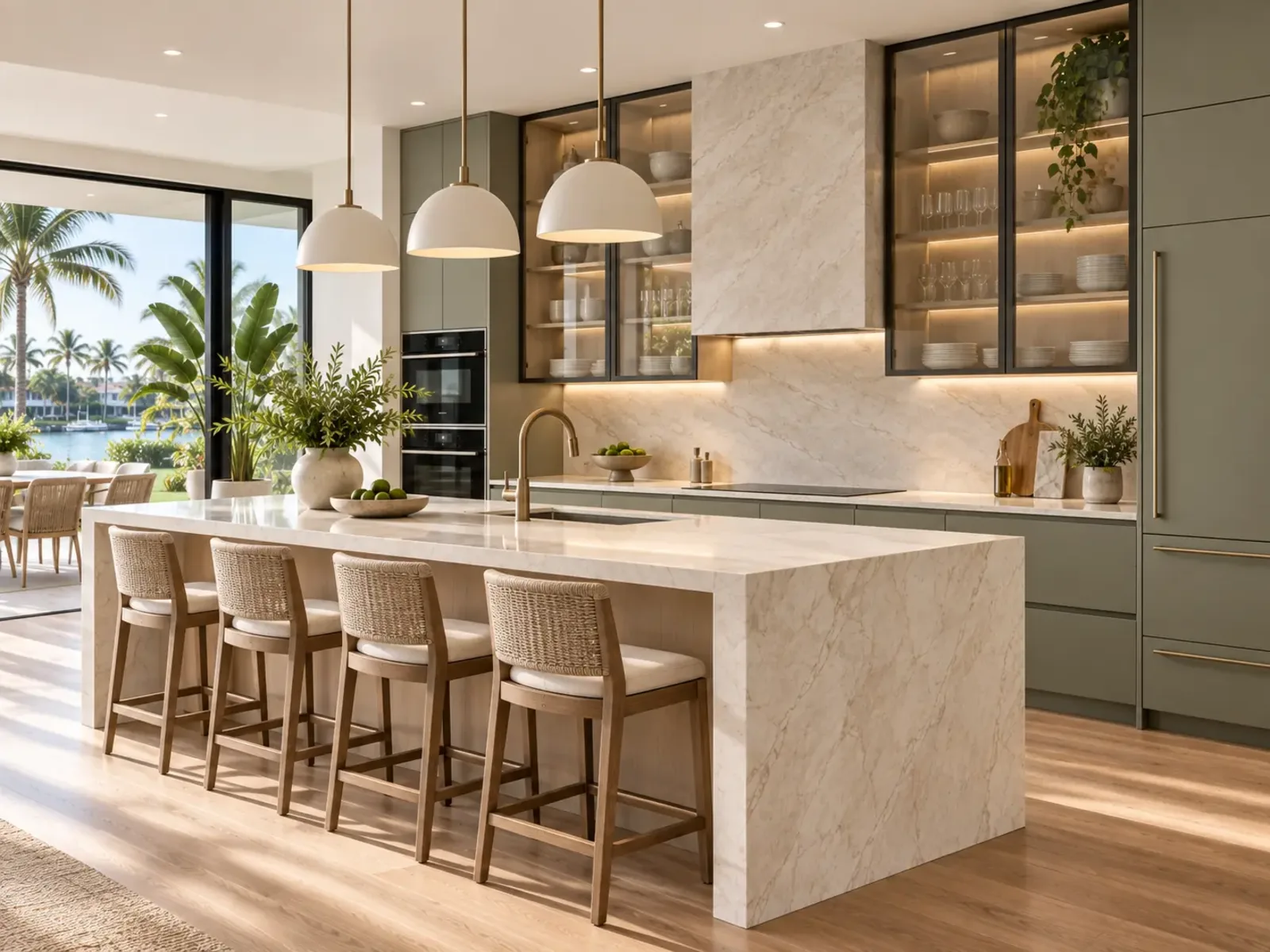
Coastal is a palette and a texture strategy more than a door profile. It typically uses a simple shaker or beaded door in warm white, soft sand, pale green or muted blue, combined with natural textures — woven pendants, rattan stools, light oak accents — and a preference for open sightlines.
Done carefully it feels bright and relaxed. Done heavily it slides into theme. The restraint is in keeping the nautical references to texture and light rather than motif.
White Oak and Natural Wood
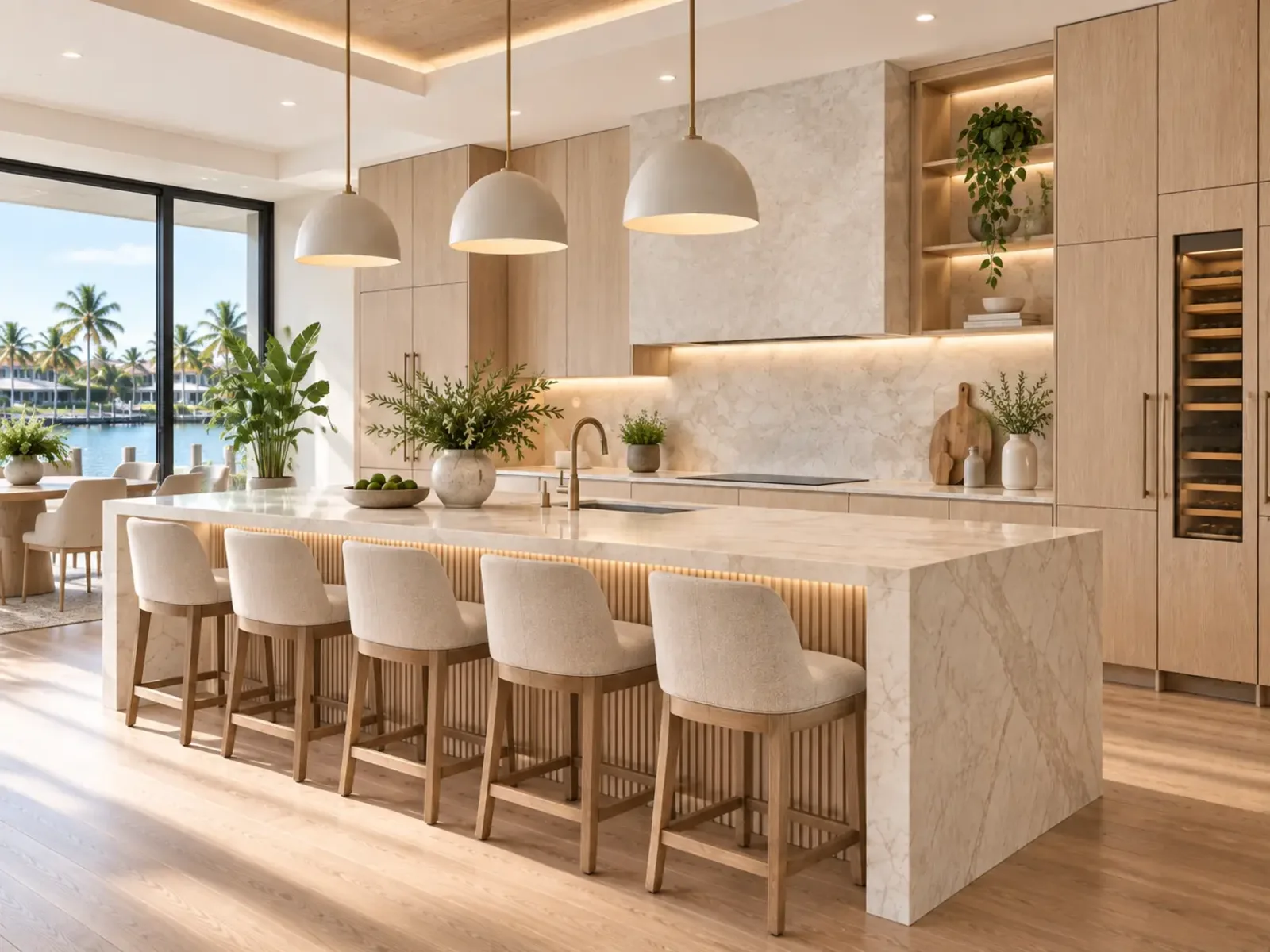
Natural wood has moved from accent to primary in many Palm Beach kitchens. White oak in particular, with a clear or lightly toned finish, carries warmth against marble and brass without the heaviness of darker stained species.
Grain matters here: rift-sawn oak gives a straight, quiet grain while plain-sawn shows more dramatic cathedral figure. Tone varies board to board, which is part of the appeal and something to expect rather than be surprised by.
Painted Cabinetry
Paint gives the widest color control of any finish. Warm whites and creams dominate in bright coastal interiors because cool whites can read clinical against strong daylight. Deep navy, muted greens and soft greys work particularly well on islands and lower cabinetry.
Factory-applied finishes are generally more uniform and durable than site painting. On wood doors in a humid climate, expect the possibility of fine seasonal lines at panel joints; MDF door construction largely avoids this.
Two-Tone Kitchens
Two-tone schemes give a kitchen a focal point without committing the whole room to a bold color. The most common arrangements are a wood or darker island against a lighter perimeter, or darker base cabinets with lighter uppers, which tends to ground the room visually.
The rule that keeps two-tone from looking accidental is hierarchy: one color clearly dominates, the second appears in a defined place, and hardware and countertop selections tie the two together.
Choosing for Your Home
- Historic homes in El Cid and Grandview Heights: shaker or transitional, painted, modest proportions
- Downtown condominiums: slab or minimal-frame doors, integrated appliances, restrained hardware
- Waterfront residences: light painted tones or natural oak, low-sheen finishes, open sightlines
- Newer western-community homes: scaled proportions, tall uppers, two-tone islands
- Mid-century Northwood houses: simple profiles, honest materials, warm neutral color
Design Inspiration
Style Directions
Related Pages
Keep Planning
Shaker Cabinets
Proportions and paint.
ViewModern Cabinets
Slab doors and integration.
ViewWhite Oak Cabinets
Grain and tone.
ViewCabinet Finishes
Paint, stain, sheen.
ViewCabinet Materials
Boxes and doors.
ViewCabinet Hardware
The finishing detail.
ViewCabinet Design
Putting it together.
ViewCost Calculator
Price the direction.
ViewHomeowner Questions
Frequently Asked Questions
Flat slab doors have the fewest places for grease and dust to settle, which makes them the simplest to wipe down. Shaker's recessed panel edge collects a little more, though it is straightforward with a soft cloth. Heavily detailed raised-panel doors take the most care.
Next Step
Planning New Kitchen Cabinetry?
Share your kitchen, your storage priorities and the look you have in mind. We will help you plan cabinetry that fits the room and the way you cook.
Call now for service availability. Please have your 5-digit ZIP code ready.